
Growing Pickling Cucumbers at Home & Home Canning
- Gloria D. Cassell

- Jul 8, 2025
- 6 min read
Updated: Jul 18, 2025

There's something deeply satisfying about growing your own food, and even more rewarding when you can preserve that harvest to enjoy throughout the year. Pickling cucumbers are one of the most gratifying vegetables to grow and preserve—they're relatively easy to cultivate, prolific producers, and transform into delicious pickles that capture summer's essence in a jar.
At Glo Cultivates Gardens, we believe anyone can master the art of growing pickling cucumbers and home canning with the right guidance. This comprehensive guide will walk you through everything from seed selection to sealed jar, helping you experience the joy of homegrown pickles.
Growing pickling cucumbers at home, Why Grow Pickling Cucumbers?
Pickling cucumbers differ from their slicing cousins in several important ways. They're typically smaller, with thinner skins, fewer seeds, and a crisp texture that holds up well during the pickling process. While you can pickle regular cucumbers, varieties specifically bred for pickling will give you superior results.
Beyond the practical benefits, growing pickling cucumbers connects you to generations of gardening wisdom. Home canning is a time-honored tradition that reduces food waste, saves money, and puts you in control of exactly what goes into your food.
Choosing the Right Cucumber Varieties
The foundation of great homemade pickles starts with selecting the right cucumber varieties. Here are some excellent options for home gardeners:
Boston Pickling: A classic heirloom variety producing medium-sized fruits perfect for both whole pickles and spears.
Double Yield: True to its name, this productive variety offers abundant harvests of uniform cucumbers.
Chicago Pickling: Another reliable heirloom that produces early and consistently.
Parisian Pickling Gherkin: Ideal for tiny, crisp gherkins with excellent flavor.
Monika: A parthenocarpic variety (doesn't require pollination) making it perfect for greenhouse growing or areas with few pollinators.
For gardeners with limited space or those growing in containers, bush varieties like "Bush Pickle" or "Spacemaster" offer compact growth habits while still producing plenty of pickling cucumbers.
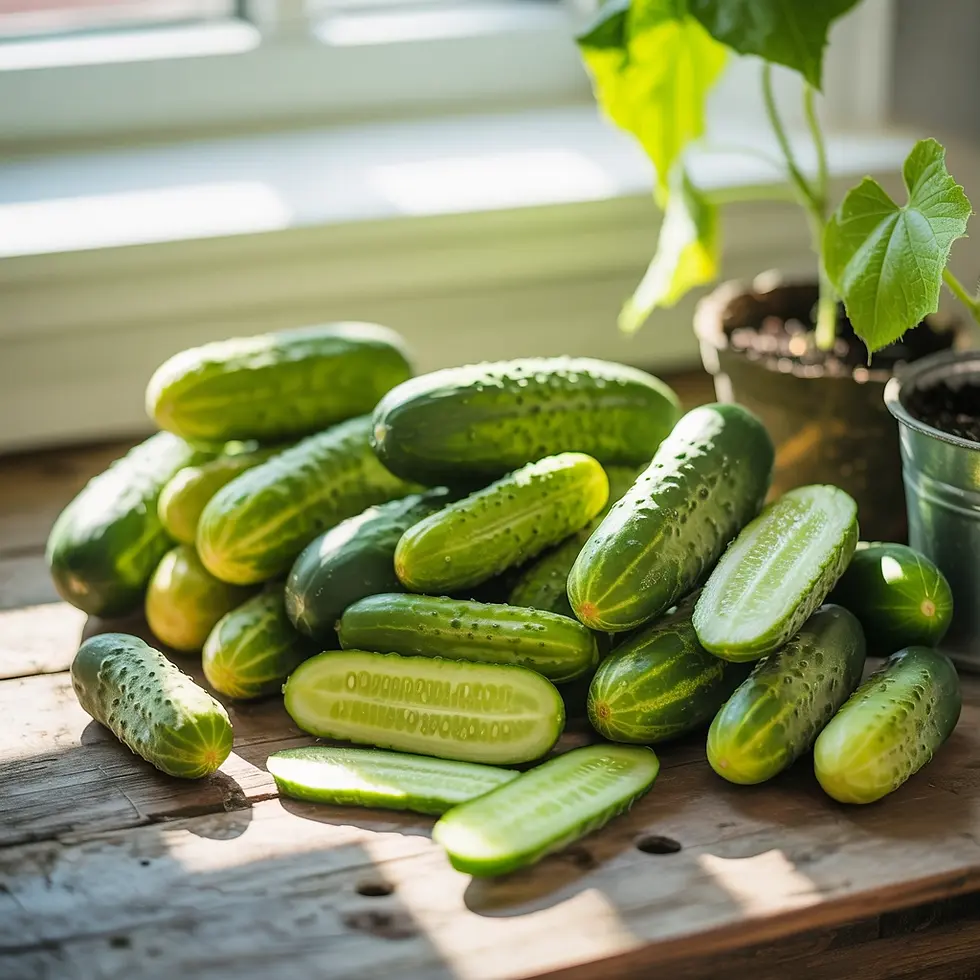
Growing Pickling Cucumbers Successfully
When and How to Plant
Timing is crucial when growing cucumbers:
Start seeds indoors 3-4 weeks before your last spring frost date to get a jump on the season.
Direct sow outdoors after all danger of frost has passed and soil temperatures reach at least 60°F (16°C).
Plant in succession (every 2-3 weeks) for continuous harvests throughout summer.
Cucumbers thrive in:
Full sun (at least 6 hours daily)
Rich, well-draining soil with plenty of organic matter
Soil pH between 6.0-7.0
Warm conditions (65-75°F/18-24°C is ideal)
Trellising: The Secret to Better Picklers
While bush varieties can grow without support, most pickling cucumbers benefit enormously from trellising. Growing vertically offers several advantages:
Improved air circulation reduces disease pressure
Better sun exposure leads to more uniform fruits
Easier harvesting means you'll catch more cucumbers at their prime
Space efficiency allows you to grow more in less ground area
Cleaner fruits that aren't in contact with soil
A simple A-frame trellis, cattle panel arch, or even tomato cages can work well for supporting cucumber vines.
Water and Fertility Needs
Consistent moisture is essential for cucumber success. Irregular watering leads to bitter fruits and stress-related problems. Aim to:
Provide 1-2 inches of water weekly
Water at the soil level (not overhead) to prevent leaf diseases
Mulch around plants to retain moisture and suppress weeds
For fertilizer, cucumbers are moderate to heavy feeders:
Start with compost-enriched soil
Apply a balanced organic fertilizer at planting time
Side-dress with additional compost or fertilizer when plants begin flowering
Harvesting for Perfect Pickles
The key to abundant cucumber harvests is picking them frequently—every 1-2 days during peak season. For pickling:
Harvest when fruits reach 2-6 inches long, depending on your pickle preference
Pick in the morning when cucumbers are most crisp
Use clean, sharp scissors or pruners to cut (don't pull) fruits from vines
Handle gently to avoid bruising
Remember: the more you harvest, the more your plants will produce. Left unpicked, cucumbers signal the plant to stop flowering and focus on seed production.

Home Canning Basics: Equipment You'll Need
Before diving into pickle-making, gather these essential supplies:
Water bath canner or large stockpot with rack
Canning jars (pint or quart sized) with new lids and bands
Wide-mouth funnel for filling jars
Jar lifter for safe handling
Bubble remover tool (or plastic knife)
Clean kitchen towels
Measuring cups and spoons
Large pot for preparing brine
The Step-by-Step Pickling Process
Preparing Your Workspace and Jars
Clean thoroughly: Wash counters, tools, and hands before starting
Sterilize jars: Wash jars in hot, soapy water, rinse well, and keep warm until ready to fill
Prepare new lids: Follow package directions (usually soaking in hot water)
Set up processing area: Organize your workspace for an efficient workflow
Classic Dill Pickle Recipe
Ingredients:
3-4 pounds pickling cucumbers
8 cups water
6 cups white vinegar (5% acidity)
1/4 cup sugar
1/2 cup pickling or kosher salt (not iodized)
1 tablespoon mixed pickling spices
Per jar: 1 clove garlic, 1 teaspoon mustard seed, 1 teaspoon dill seed (or 2-3 sprigs fresh dill)
Instructions:
Prepare cucumbers:
Wash thoroughly in cool water
Remove 1/8 inch from blossom end (prevents enzymes from softening pickles)
Cut into desired shapes (spears, coins, or leave whole for gherkins)
Make the brine:
Combine water, vinegar, sugar, salt, and pickling spices in a large pot
Bring to a boil, stirring to dissolve sugar and salt
Pack the jars:
Add garlic, mustard seed, and dill to each jar
Pack cucumbers in tightly but without crushing
Leave 1/2 inch headspace at top
Fill and seal:
Ladle hot brine over cucumbers, maintaining 1/2 inch headspace
Remove air bubbles with bubble remover tool
Wipe jar rims clean with damp cloth
Apply lids and bands (finger-tight only)
Process jars:
Place filled jars in water bath canner with water covering jars by 1-2 inches
Bring to a boil and process pints for 10 minutes, quarts for 15 minutes (adjust for altitude)
Start timing when water returns to a full boil
Cool and store:
Remove jars and place on towel-covered counter
Allow to cool undisturbed for 12-24 hours
Check seals (lids should be depressed in center and not flex)
Label with date and store in cool, dark place
Flavor Variations to Try
Once you've mastered the basic dill pickle, experiment with these variations:
Spicy Dills: Add 1/2 teaspoon red pepper flakes or 1 sliced jalapeño per jar
Bread & Butter Pickles: Increase sugar to 2 cups and add 1 tablespoon each of mustard seed, celery seed, and turmeric to the brine
Garlic Lovers: Add 3-4 cloves of garlic per jar
Herb-Infused: Try adding fresh herbs like thyme, basil, or tarragon for unique flavor profiles
Common Pickling Problems and Solutions
Soft or Slippery Pickles: Usually caused by:
Using overripe cucumbers
Not removing blossom ends
Insufficient processing time
Too little vinegar in recipe
Discolored Pickles: Often due to:
Hard water minerals
Using iodized salt
Natural reactions with spices (especially turmeric)
Metal utensils reacting with vinegar
Dark or Hollow Centers: Typically from:
Cucumbers held too long before processing
Improper curing
Uneven brine concentration
Beyond Basic Pickles
Once you've mastered water bath canning, consider exploring:
Refrigerator pickles: Quick-process pickles stored in the refrigerator
Fermented pickles: Traditional method using salt brine and natural fermentation
Quick pickles: Ready in hours rather than days or weeks
Conclusion: From Garden to Table
Growing and preserving your own pickling cucumbers connects you to seasons, soil, and sustainability. There's nothing quite like the satisfaction of opening a jar of homemade pickles in the middle of winter, knowing you grew and preserved that garden goodness yourself.
At Glo Cultivates Gardens, we believe in empowering gardeners of all levels to grow and preserve their own food. Whether you're growing in a spacious backyard or container gardening on a patio, pickling cucumbers offer big rewards for relatively little effort.
Ready to expand your gardening and preserving skills? Visit our YouTube channel were we take a deep dive into growing Pickling Cucumbers and watch our hands-on demonstration on harvesting & canning the pickling cucumbers .
Explore our blog for more growing guides, or join our gardening community to share your pickling successes and challenges!


Comments